
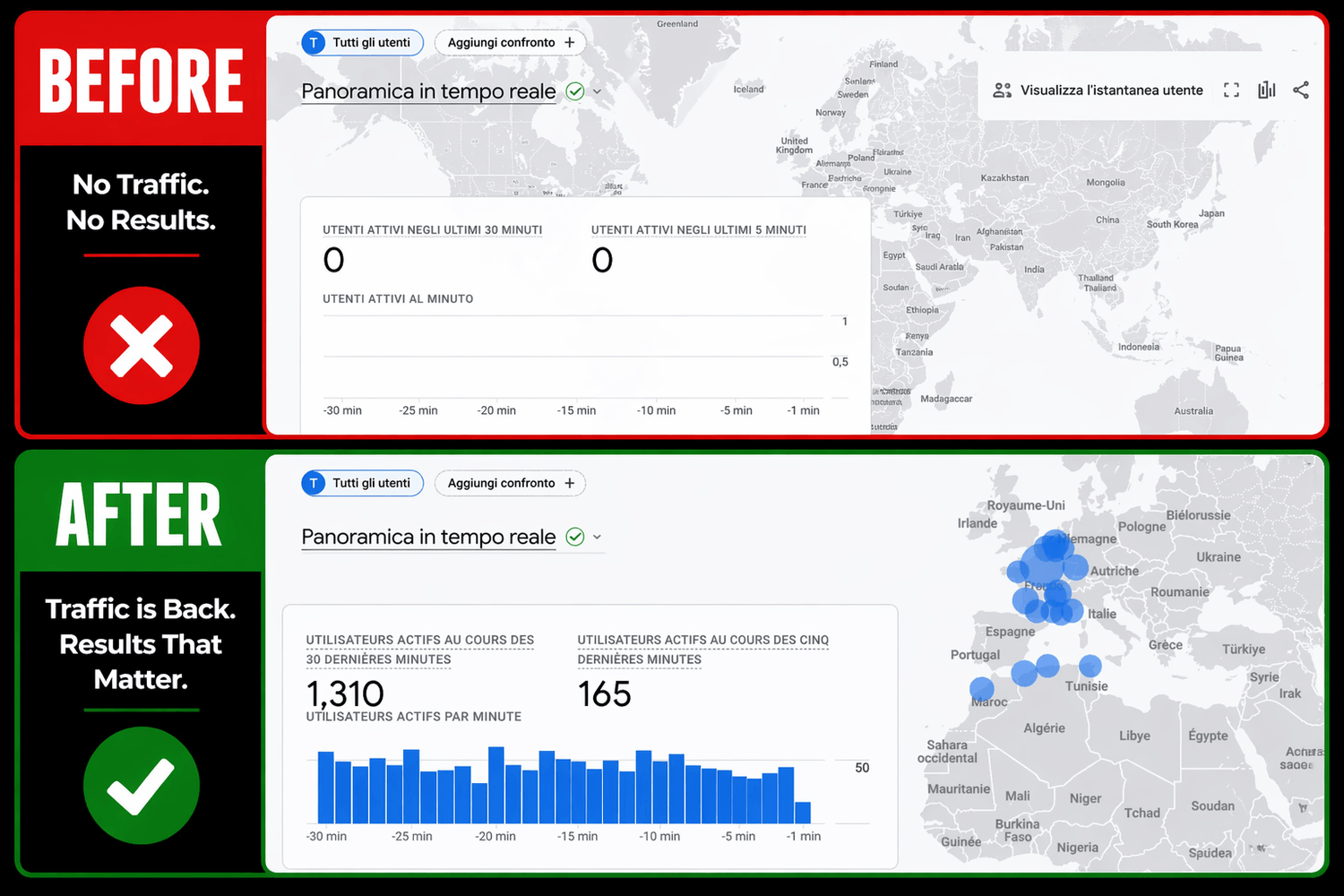
Google Discover can generate thousands of visits to a website without users searching for a specific keyword. For publishers, bloggers, and digital media businesses, this makes Discover an attractive opportunity to increase visibility, reach new readers, and grow advertising revenue.
However, getting consistent exposure on Google Discover can be challenging. A website may publish quality content for weeks without seeing significant results, while another article suddenly attracts thousands of visitors within hours.
So, how can publishers identify opportunities, test their content, and build a more effective Google Discover strategy?
One approach combines trend research, fresh content, Google Search Console monitoring, and audience distribution through push notifications. With DiscoverPulse Traffic Boost, publishers can organize this process and explore ways to amplify their content distribution.
1. Understand What Makes Google Discover Different
Google Discover differs from traditional Google Search. Search results respond primarily to a user’s query, whereas Discover recommends content based on signals such as user interests, content relevance, and Google’s understanding of the publisher and the article.
This means that traditional keyword optimization alone may not be enough. Publishers also need to consider whether a topic is timely, whether the headline accurately communicates its value, and whether the article provides a satisfying experience for readers.
Images, mobile usability, page speed, originality, and audience relevance are important parts of a strong publishing strategy.
The challenge is that Discover visibility can fluctuate significantly. An article may receive an initial burst of impressions and then decline, while another may continue attracting visitors over several days.
For this reason, publishers should focus on identifying repeatable editorial patterns rather than expecting every article to perform equally well.
DiscoverPulse can help publishers explore trending topics and organize their content strategy around opportunities that are relevant to their audience.
2. Find Trending Topics Before Publishing
The first step in a Google Discover growth strategy is choosing the right subject.
Publishing more articles does not automatically produce more traffic. Content needs to offer something relevant to readers at the right moment.
Use DiscoverPulse to identify emerging topics and potential content opportunities in your niche. Look for subjects that combine current interest, a clear audience, and enough substance to support a useful article.
Before publishing, ask yourself three questions:
Is this topic relevant to my website’s audience?
Can I provide useful information, original reporting, or a genuinely interesting perspective?
Can I publish an accurate, compelling headline and a strong featured image?
Avoid choosing a topic simply because it is trending elsewhere. Your website should have a credible reason to cover it.
For example, a publisher covering personal finance might explore a newly announced tax change, while an entertainment website could focus on a major television announcement.
The objective is to combine timely topics with your site’s established editorial identity.
3. Start Your Campaign With a Fresh, Indexed URL
Once you have identified a suitable topic and published your article, check Google Search Console.
Open the URL Inspection tool and determine whether Google has indexed the page. You can also review the Discover performance report, when available, to understand whether your website has previously received Discover impressions and clicks.
For a structured test, select a recently indexed article that is relevant to your audience and suitable for distribution.
DiscoverPulse Traffic Boost can be incorporated into your content promotion workflow to help organize traffic distribution around selected URLs.
Before launching a campaign, verify that your tracking is configured correctly and that the traffic source, campaign parameters, and landing page can be measured.
Remember that indexing does not guarantee Discover distribution. Google decides independently whether content is eligible and appropriate for recommendation.
4. Test Three Fresh URLs Over Three Days
Rather than changing multiple variables simultaneously, run a small, controlled publishing experiment.
A practical three-day test could look like this:
Day 1: Publish a fresh article based on a relevant trending topic. Check indexing, record the publication time, and monitor its performance.
Day 2: Publish a second original article addressing another relevant topic. Compare its early engagement and distribution with the first article.
Day 3: Publish a third article and review the results across all three URLs.
If you use push notifications, send them only to subscribers who have opted in, and make sure the notification accurately describes the article. Use a genuine audience with a legitimate interest in your content.
Do not purchase artificial clicks or use automated interactions designed to imitate reader interest. These tactics can distort your analytics and may create risks under Google’s spam policies or the policies of your advertising provider.
The purpose of this test is to understand which topics and formats attract real readers—not to manufacture engagement signals.
5. Monitor Google Discover Performance in Search Console
After publishing, open Google Search Console and navigate to the Discover performance report if your property has sufficient data to display it.
Pay attention to three core metrics:
Impressions: How often your content was shown in Discover.
Clicks: How many times users clicked through to your content.
Click-through rate (CTR): The proportion of impressions that generated clicks.
Look for changes over time rather than judging a campaign from a single data point.
A small increase in Discover impressions may indicate that an article has started receiving visibility, but it is not proof that Google will distribute your next article. Similarly, an article that receives no Discover traffic during a short test is not necessarily evidence that your entire domain is unsuitable.
Allow for reporting delays, compare similar articles, and evaluate results over a reasonable period.
Use Google Analytics alongside Search Console to understand what happens after visitors arrive. Review engagement, engaged sessions, time spent on the page, and whether readers explore additional content.
6. Use Traffic Boost to Support Your Growth Strategy
Once you identify content that attracts genuine interest, the next step is to improve your distribution process.
DiscoverPulse Traffic Boost is designed to help publishers incorporate traffic promotion into their broader content workflow. Combined with trend research and performance monitoring, it can provide a structured way to test articles and evaluate how audiences respond.
The key is to treat Traffic Boost as a distribution and experimentation tool, not a guarantee of Google Discover placement.
Push notifications can be useful for bringing existing readers back to a website. When subscribers choose to receive updates, relevant notifications can help publishers distribute fresh content directly to an interested audience.
However, additional clicks do not automatically cause Google Discover to recommend an article. Google uses multiple systems and signals, and there is no publicly documented method that guarantees an organic Discover spike through purchased traffic or push campaigns.
Advertising and monetization policies also depend on the traffic source, user consent, and the specific rules of the network involved. Publishers using Google AdSense should review Google’s invalid traffic policies and avoid incentivized or artificial engagement.
The safest long-term approach is to build a genuine audience, promote useful content transparently, and measure the results.
Start Growing Your Google Discover Strategy Today
Growing on Google Discover requires more than publishing articles and waiting for traffic. Publishers need a repeatable process for discovering relevant topics, creating fresh content, measuring performance, and improving distribution.
DiscoverPulse brings trend discovery and Traffic Boost into this workflow, helping publishers approach their growth experiments in a more organized way.
If you want to explore new content opportunities and build a more systematic publishing strategy, visit DiscoverPulse.it and learn how Traffic Boost can fit into your workflow.
Start with a small test, measure the results carefully, and focus on the content that delivers genuine value to your readers.
DiscoverPulse — discover opportunities, test your content, and build a smarter Google Discover strategy.